Think about the sandwich you often eat for lunch. Two slices of bread, a well-loved filling, perhaps a little mayonnaise, and lunch is sorted. Now imagine making that same sandwich while trying to reduce your carbohydrate intake.
The fillings might be no different, but changing the bread product could make a considerable difference. For those exploring lower-carbohydrate diets, understanding what goes into those two slices is a useful place to start.
Why Look at Carbs in a Whole Sandwich?
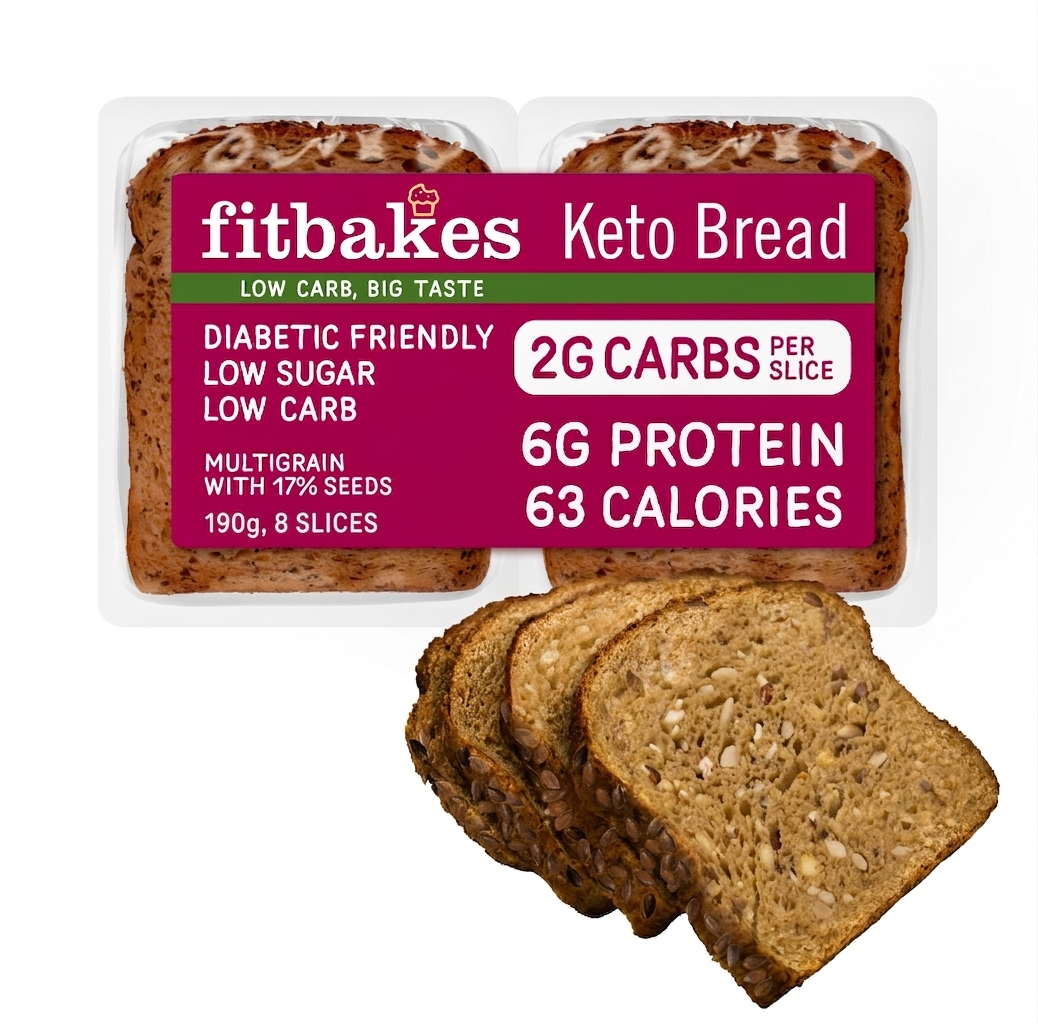
Image credit: fitbakes.co.uk
The search for the lowest bread carbs can be tricky when labels use different measurements. Carbohydrate figures may be listed for each slice, based on the loaf. The most useful comparison often starts with your typical meal. For a lunchtime sandwich made with two slices, add up the carbohydrates in both pieces of bread before considering the filling.
A serving-based calculation helps you judge products by your normal serving. The manufacturer markets Fitbakes Seeded Low Carb Loaf at 0.8g net carbohydrates per slice; that works out to approximately 1.6g net carbohydrates. The manufacturer’s product page also displays a 2g carbohydrate claim, so checking the current nutrition panel is advisable.
How Does Keto-Friendly Bread Differ?
A common question about bread and keto is whether eating bread is possible at all. Much of the carbohydrate in conventional wheat bread comes from the starch it contains. Keto-friendly alternatives use alternative ingredient combinations to provide a bread-like experience with fewer carbohydrates.
However, the term keto-friendly does not automatically mean an item contains no carbohydrates. Your total intake also depends on how much you eat, spreads, sandwich fillings and other food throughout the day. For a person preparing a lunchtime sandwich, choosing reduced-carbohydrate bread may create additional room when planning the rest of the meal.
Looking Beyond Carbs: Seeds and Protein
A bread comparison should involve more than its carb content. According to Fitbakes, the seeded loaf contains 7g protein in each slice and 17% seeds, among them golden linseeds and sunflower seeds. Its manufacturer-reported energy value is 63 calories in a single slice. Seeds contribute a distinctive taste and texture, while protein is an important nutrient for normal body maintenance.
When comparing bread with low carbohydrates, consider these nutritional characteristics alongside the ingredients and allergen information. An item’s suitability depends on your individual dietary needs, not simply its carbohydrate count.
Making Toast With Low-Carbohydrate Bread
One concern about alternative bread is whether it will be enjoyable to eat. The texture of certain lower-carb loaves can be different to conventional supermarket bread. The manufacturer suggests putting its Seeded Low Carb Loaf in the toaster for a golden, nutty finish. Try serving it with scrambled eggs for breakfast or preparing an open sandwich with avocado, tomatoes, and your preferred seasoning.
For another meal, bread with low carbs works as a side for soup. Keeping familiar meals in your routine can be useful to you adjust your diet without changing everything at once.
Check the Bread Label Before You Buy
To appreciate carbs in low carb bread, read beyond the marketing claim. Review portion information, carbs, protein, fibre and the list of ingredients. Because UK labels generally separate carbohydrates from fibre, take care during a comparison of them with labels from other countries that may follow different rules.
A net carbohydrate claim deserves comparing with the product’s complete nutrition information. Products with different slice weights are easier to examine when you consider the full label.
A Simple Approach to Lower-Carb Meals
Eating fewer carbs need not mean abandoning your favourite meals. A suitable bread swap can help you keep making familiar meals while reducing your carbohydrate intake.
Fitbakes Seeded Low Carb Loaf offers one such option, combining a seeded recipe with manufacturer-reported low carbohydrate and high protein content. Ultimately, the best choice is a bread that fits your own nutrition goals, tastes enjoyable, and works with the meals you regularly prepare.